Pocono Basement Flooding: What Causes It and How to Stop It
Pocono basement flooding has 5 real causes: a high water table in valley lowlands, shale groundwater pressure on hillsides, failed sump pumps, surface water from bad grade and gutters, and foundation cracks. Here is how each one gets fixed.
Published · By Vincent DeLuca
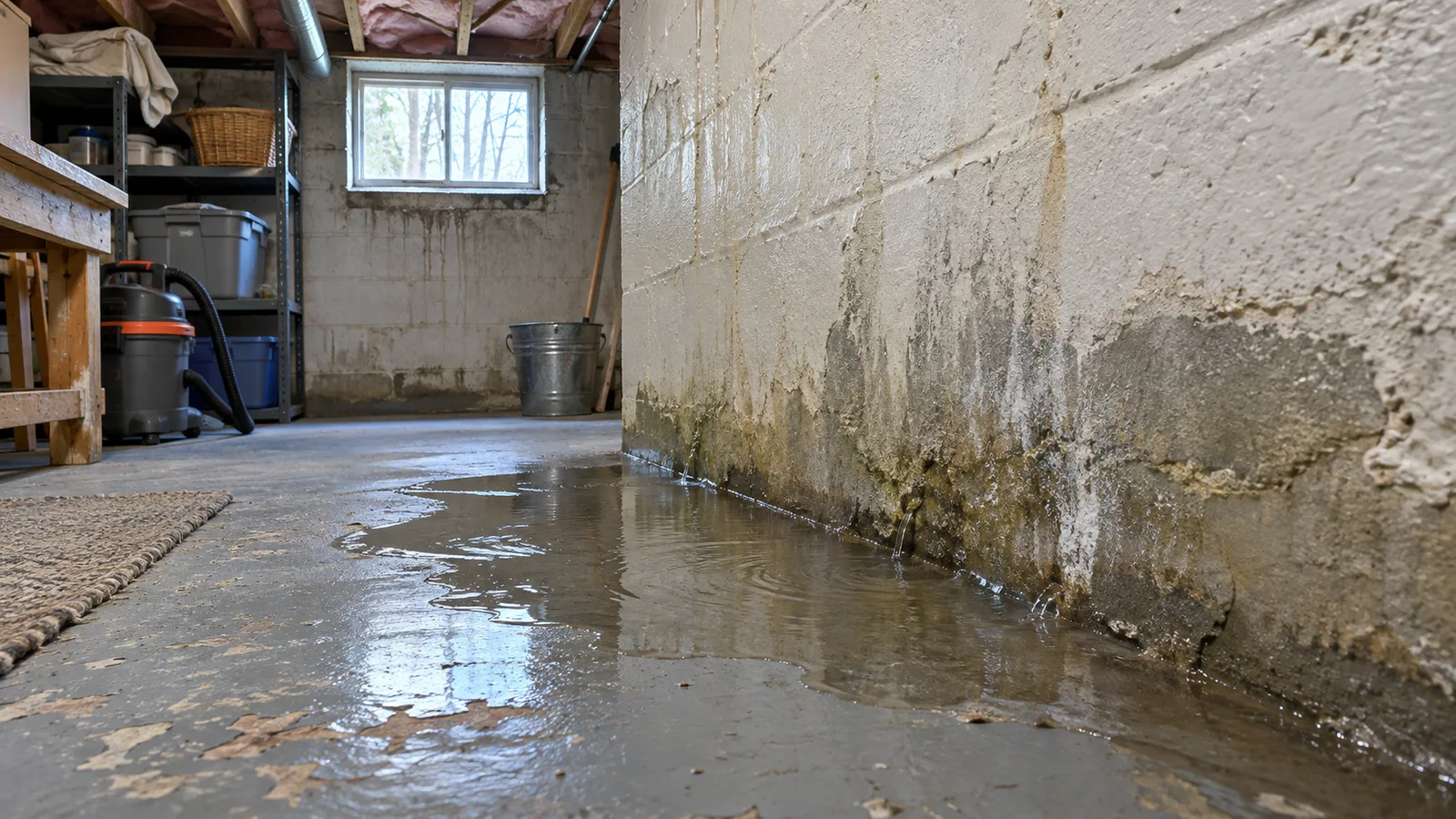
Pocono basement flooding has 5 real causes: a high water table in valley lowlands, shale groundwater pressure on hillsides, failed or undersized sump pumps, surface water from bad grade and gutter discharge, and foundation cracks in poured or block walls. Every wet basement in Monroe County traces to one or more of these. Here is what each one does, how to tell which is yours, and what the honest fix costs in 18301 and the surrounding Pocono towns.
Why do so many Pocono basements flood every spring?
It is the snowmelt. Monroe County averages 50 to 70 inches of snow a year and the snow pack does not melt all at once. From mid-March through early May every single year, melt runs off the ridges and the ski areas and saturates the ground. The water table in valley lowlands along the Brodhead Creek, Pocono Creek, and Delaware River floodplain rises 2 to 4 feet above the basement slab and stays there for 4 to 6 weeks. If your sump pump cannot keep up with that for a month straight, or if you have no sump at all, water comes in.
What is the difference between hillside and valley basement flooding?
Hillside homes on fractured shale ledge have groundwater pressure pushing against the foundation wall year round because the shale holds water behind the wall like a wick. You see this in East Stroudsburg's East Side, up toward Analomink, along the Camelback hillside in Tannersville, and climbing Chestnut Ridge Road in Saylorsburg. The water comes through the cove joint where the slab meets the footer, through shrinkage cracks in poured walls, or through mortar joints in block walls. Valley homes on sandy loam have the opposite problem: the substrate drains fast but rises with the water table during snowmelt, pushing water up through the slab itself.
Which fix works for which problem?
Hillside shale pressure: interior French drain tied to a cast iron sump with battery backup, $8,000 to $15,000 for a typical 1,200 to 1,800 square foot basement. Valley water table: same fix, but with a 1/2 HP primary pump sized for continuous cycling. Failed sump pump alone: $600 to $1,100 for a cast iron Zoeller or Liberty swap. Surface water from bad grade and gutters: $400 to $1,500 for regrade, downspout extensions, and maybe a yard drain. Single wall crack: $400 to $1,500 polyurethane injection. Mortar joint failure on old stone or block walls: interior drain plus parge coat, $9,000 to $14,000.
How do I know which cause is mine?
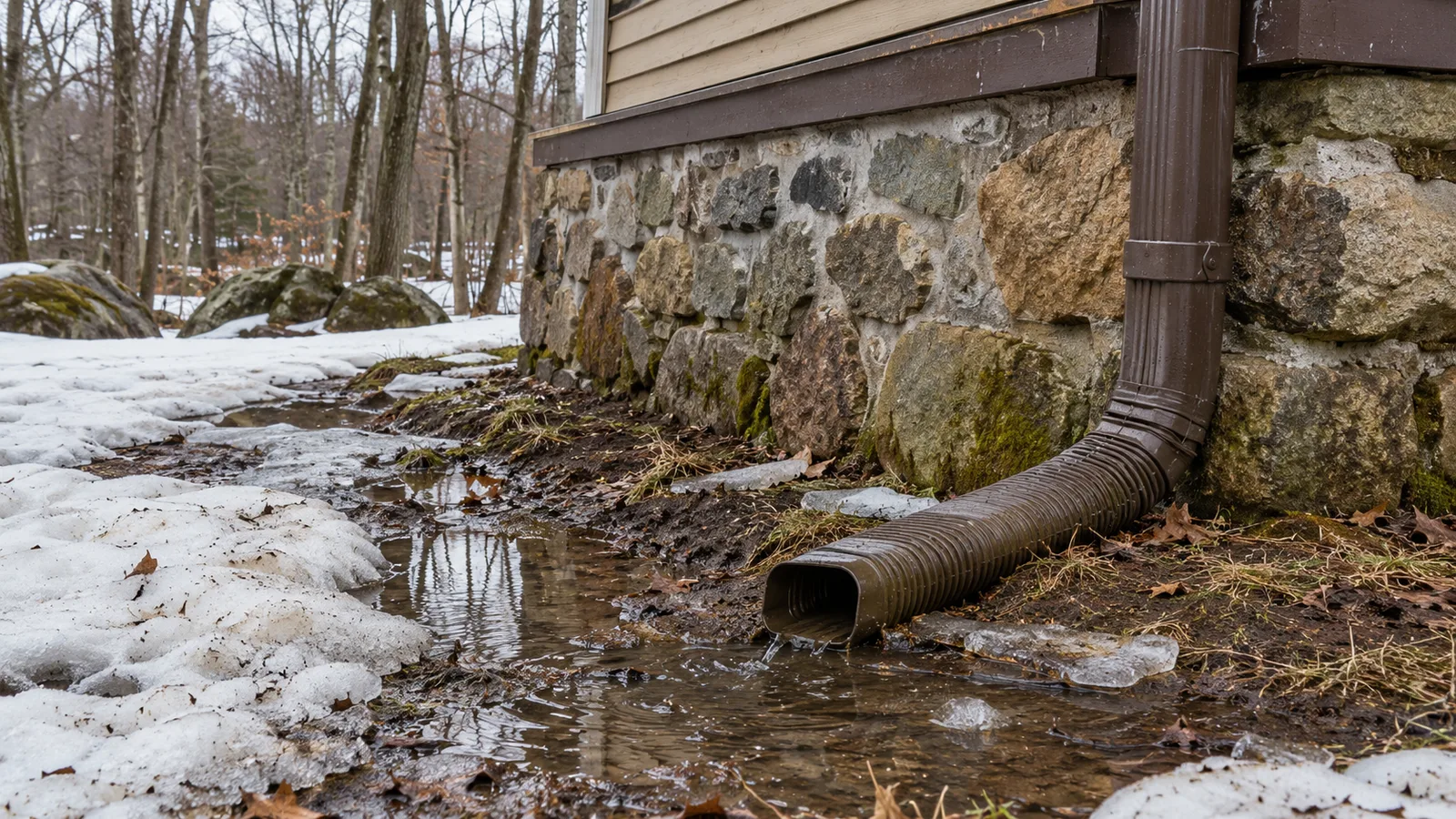
Walk the basement during a heavy rain or during March snowmelt, which is when every weakness shows. If the water comes through a single crack or spot on the wall, it is a crack injection job. If it comes through the cove joint along most of one wall or multiple walls, it is an interior drain job. If the water is pushing up through the slab or the floor drain, it is a water table problem needing drain and sump. If you can hear your sump pump running constantly and the water is still rising, your pump is undersized or failing. If the water is only showing up after a gutter downspout dumps nearby, your problem is surface water, not groundwater.
Why does cheap waterproofing fail in the Poconos?
Two things. First, hardware-store sealer paint rolled on the inside of a basement wall. Those coatings have zero bond strength against hydrostatic pressure and the first spring snowmelt pops the paint off in sheets. Second, flexible corrugated black pipe used instead of rigid perforated drain pipe. Corrugated pipe collapses under slab load within 10 years and silt packs the ribs so the pipe cannot be jet-cleaned later. Skip both. We only use 4-inch rigid SDR 35 perforated pipe and hydraulic cement with fiber reinforcement, and every system comes with a transferable workmanship warranty.
What happens if I ignore it?
Standard maintenance timeline for an ignored wet basement in the Poconos: Year 1, musty smell and some efflorescence on walls. Year 2, mold on stored items and the bottom foot of drywall. Year 3, floor joists above the basement start showing moisture damage and the bottom plates of interior walls begin to rot. Year 5, wood-destroying insects move in because the wood framing is wet. Year 7 to 10, structural repairs to joists and sill plates run $15,000 to $40,000 on top of whatever waterproofing you eventually do. Fix the water first, then the damage.
When should I DIY, and when should I call?
DIY is fine for: regrading soil to slope away at 6 inches per 10 feet; extending downspouts 8 to 10 feet from the house with flexible pipe or splash blocks; cleaning gutters twice a year; keeping window wells clear of leaves and snow; swapping a failed sump pump if you can handle plumbing basics and the pit is accessible. DIY is not fine for: cutting the basement slab (hits buried utilities), injecting active cracks (hand caulk-gun pressure cannot push resin full depth), carbon fiber on bowing walls, or any job that requires a Monroe County permit. See our sump pump installation and repair page for pump-specific detail or basement waterproofing for full-system info.
What is the fastest a leak can be stopped during an active spring flood?
If your basement is actively flooding during March or April snowmelt, we can usually be on site inside 4 hours for weekday calls before 2 PM. We pump the standing water with a high-volume trash pump, find the source during the pump-down, quote the permanent fix on the spot, and if the sump pump itself is the problem we can swap it the same visit. A full interior French drain install cannot start during an active flood (concrete will not cure in a flooded basement), but the standing water goes away and the permanent install usually schedules inside 5 business days.
If your basement in East Stroudsburg, Stroudsburg, Marshalls Creek, or anywhere in Monroe County is holding water or you are worried about the next spring thaw, give the shop a call and we'll walk you through what it probably is over the phone first.