Spring Snowmelt and Your Basement: Preparing Pocono Foundations
Spring snowmelt in the Poconos pushes the water table 2 to 4 feet above basement slabs for 4 to 6 weeks every March through May. Here is what to inspect, test, and fix in February before the thaw starts.
Published · By Vincent DeLuca
Spring snowmelt in the Poconos pushes the water table 2 to 4 feet above the basement slab for 4 to 6 weeks every single year, from mid-March through early May. 50 to 70 inches of snowfall across the winter plus hard-freezing ground that cannot absorb runoff means every ridge, hillside, and valley lowland in Monroe County sends water toward basement foundations. Here is a straight checklist of what to inspect, test, and fix in February before the thaw starts, so your basement does not flood in April.
What makes Pocono snowmelt worse than normal rain events?
It is the volume and the duration. A heavy summer rainstorm dumps 2 to 3 inches in a few hours, and that water drains off within a day. Spring snowmelt releases the full winter's snowpack over 4 to 6 weeks, which works out to roughly 5 to 10 inches of water equivalent sustained over a month. The ground stays saturated the entire time, the water table stays high, and sump pumps cycle 50 to 60 times a day for weeks without a break. Builder-grade plastic pumps burn out under that load. Cast iron is not optional in Monroe County.
When should I start the inspection?
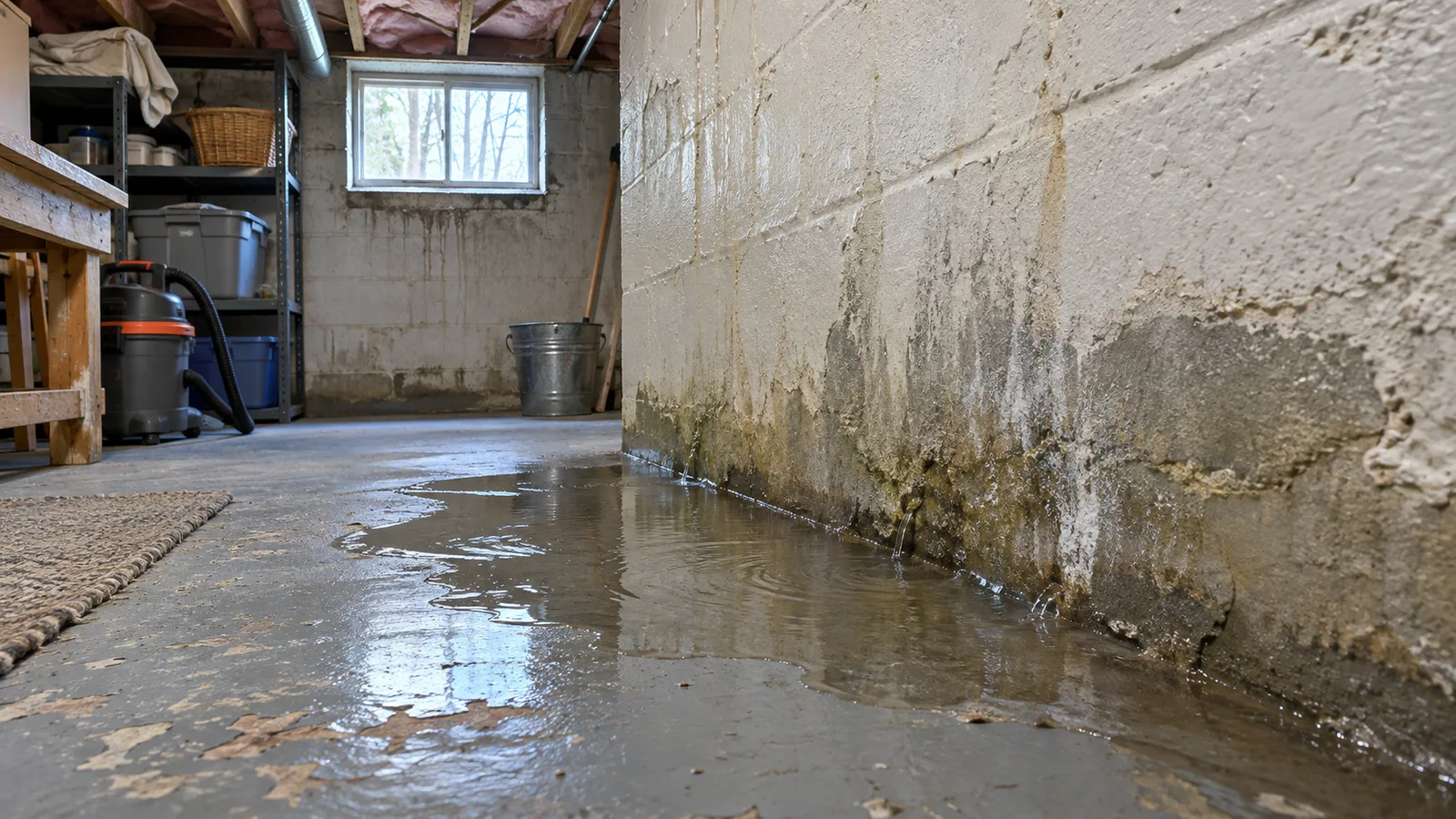
Early February, before the first serious thaw. Walk the exterior of the house and check for: ice dams at the roofline that will drip meltwater against the foundation, frozen gutters that will overflow when they thaw, downspout extensions that have shifted or broken from frost heave, grade that has settled toward the foundation over the winter, and window wells full of snow and leaves. Inside the basement, check the sump pit water level, listen for the check valve rattling when the pump cycles, look for efflorescence on walls (white chalky deposits indicate water has moved through the wall), and feel the cove joint where the slab meets the footer for moisture.
How do I test the sump pump before snowmelt hits?
Pour 20 gallons of water into the pit from a 5-gallon bucket, enough to lift the float and cycle the pump. Watch for: the pump turning on inside 5 seconds of the float rising, pumping the pit down in under 90 seconds, and the check valve seating clean when the pump shuts off. Then unplug the primary pump and test the battery backup the same way. The backup should fire within 10 seconds of the water rising past its float. If the primary cycles slow, the discharge line is partially clogged. If the backup does not fire, the battery is dead or the sensor is failed. Fix both before March.
What is the single biggest thing homeowners miss?
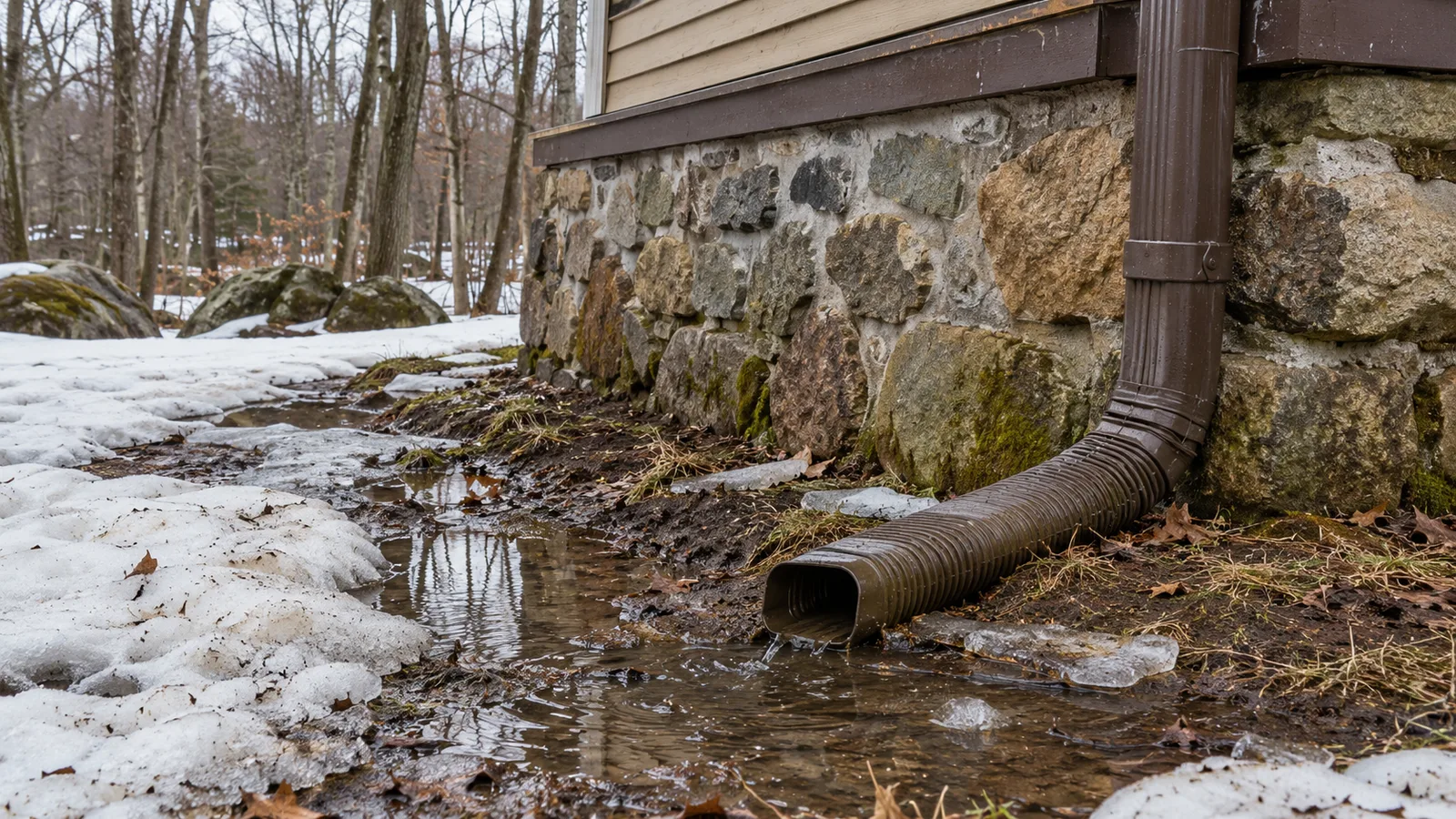
Discharge line termination. The pump pushes water out through a line that exits the exterior wall and dumps somewhere. Half the Pocono homes we service have the discharge line buried right next to the foundation or terminated inside a dry well 4 feet from the house. Both setups freeze solid in January with ground temperatures below 20 degrees for weeks, and when snowmelt hits in March, the pump runs against a frozen line, trips the thermal overload, and the basement floods. The fix is to re-terminate the line above grade, 4 to 10 feet from the foundation, with an air gap and ice guard. Typical fix runs $350 to $800.
What else should get fixed before the thaw?
A short list. Extend every downspout 8 to 10 feet from the house with rigid or heavy flexible extensions and splash blocks. Regrade soil so it slopes 6 inches of fall per 10 feet away from the foundation (snow and rain settle grade over time). Seal any visible foundation cracks wider than a nickel with hydraulic cement as a temporary measure (permanent fix is polyurethane injection, $400 to $1,500 per crack, better done in warm weather). Clear and ice-guard the window wells and make sure the drain tie-in at the bottom of each well is not clogged. Replace the sump battery backup AGM if it is older than 4 years, the plates sulfate and lose capacity even with normal use.
How do I know if my basement needs a full French drain system before next winter?
Three warning signs. First, water came in more than one spot during last spring's snowmelt, not just a single crack. Second, you can hear the sump pump running hard for days at a time during March and April and the pit is still filling faster than the pump can empty. Third, you see efflorescence or wall sweating along the cove joint in multiple walls, not just one spot. Any one of those usually means groundwater pressure from the water table, not surface water, and the fix is a full basement waterproofing interior drain system. All three together is urgent.
DIY vs call-a-pro before snowmelt
DIY is fine for: downspout extensions, regrading soil, clearing window wells, running the sump test, replacing a battery in a backup unit, cleaning the gutters. DIY is not fine for: cutting the slab for a drain, swapping a dead sump pump if you cannot handle plumbing basics, sealing active foundation cracks (will not hold), or handling a basement that already has standing water (electrical hazard). Call us for any of those. We can usually be on site same day for weekday calls before 2 PM in 18301 and the surrounding Pocono towns. See sump pump installation and repair for pump-specific pricing.
What is the worst-case Pocono snowmelt scenario?
Power outage during peak snowmelt. A 2 or 3 day winter storm takes the power out, which takes the primary sump pump out. If the battery backup has a dead AGM, or if no backup is installed, the pit fills in 6 to 12 hours during active snowmelt and water comes up through the slab and the cove joint. That is why we spec battery backup on every install and water-powered backup for homes on municipal water who want never-fail redundancy. The cost of adding a backup, $600 to $1,400, is less than the drywall and flooring you lose in a single flood event.
If your East Stroudsburg basement held water during last March's snowmelt or your sump pump is older than 10 years, call the shop in February and we'll inspect everything free before the thaw starts.